Minty: The Sleepy-and-Starlit Typeface for Dreamy Brands
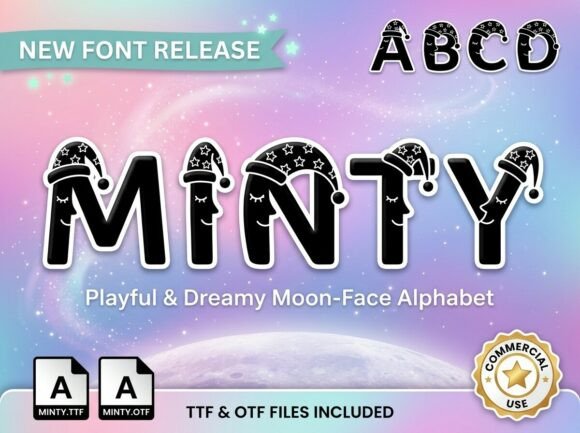
There are typefaces that simply sit on a page, and then there are those that tell a story before you’ve even read a single word. Minty belongs firmly in the latter category. It’s not just a display font; it’s a fully realized character, a tiny ambassador of sleep and dreams. Imagine letterforms that aren’t just shapes, but little beings, each with a peaceful, closed-eyed smile, nestled under a star-spangled nightcap. This is the world of Minty, a premium font designed to inject a specific, powerful emotion—sleepy-and-starlit wonder—into your creative work.
At its core, Minty is a bold, rounded sans serif with a heavy, confident weight. The letterforms are chunky and approachable, designed for high-impact scenarios where legibility at a glance is key. But what elevates it from a standard creative font to a piece of art is its personification. The "moon faces" are seamlessly integrated into the design, not as clumsy add-ons, but as an organic part of each character's personality. The gentle curves of a 'C' or the loop of a 'b' become the resting cheek of a sleeping face. This hand-drawn, illustrated quality gives it an authentic, crafted feel that digital perfection often misses.
Where Does Minty Shine? Applications Beyond the Nursery
Its first and most obvious home is in the world of children's products and nursery branding. Think of a boutique that sells organic cotton pajamas, a mobile app for bedtime stories, or the logo for a sleep consultant. Minty communicates safety, whimsy, and comfort instantly. For packaging design, especially for creative sleepwear packaging or a line of calming herbal teas, using Minty on the box does more than label—it evokes a feeling. It tells the customer, "This product is about rest and gentle dreams."
But limiting it to nurseries would be a mistake. Its personality is potent for any brand targeting a desire for calm, magic, or nostalgic comfort. Consider these applications:
- Brand Identity & Logo Design: A small-batch candle company called "Luna Glow" or a cozy bookstore could build an entire brand identity around Minty. It sets a tone that is friendly, magical, and deeply memorable.
- Editorial & Publishing: For editorial design, it’s perfect for chapter headings in a children’s book, a feature title in a magazine about mindful living, or a blog header for a writer who specializes in fantasy fiction.
- Digital Presence: In web design, use it sparingly for hero section titles or calls-to-action that need to feel special. Its real power online, however, lies in social media graphics. A quote about dreams, a promotion for a midnight sale, or a story highlight cover—Minty makes these elements pop with character, driving engagement through sheer personality.
Making Minty Work: Practical Tips for Designers and Creators
As a display typeface, Minty is built for headlines, logos, and short bursts of impactful text. Its heavy graphic weight means it’s not suited for body copy; reading a paragraph set in Minty would be exhausting. The key to using it effectively is visual hierarchy. Pair it with a clean, neutral sans serif font or even a classic serif font for supporting text. For example, a font pairing of Minty for the main logo and a font like Lato or Open Sans for menu items and descriptions creates a balanced, professional look. The contrast allows Minty’s personality to shine without overwhelming the design.
Before purchasing any commercial font, always test it thoroughly. Minty likely comes with a specific set of characters—does it include the punctuation and numerals your project requires? Check the licensing. Is it a desktop license for your print work, a webfont license for your site, or an app license? Understanding these terms is crucial for professional and legal use. A quality premium font like this is a design asset, and investing in the correct license protects your work.
Finally, evaluate the project fit with a critical eye. Does your brand’s voice align with "dreamy-and-delightful"? If you’re designing for a tech startup or a law firm, Minty is the wrong tool. But if you’re crafting an identity for a yoga studio, a children’s music class, a artisanal baker specializing in "moon pies," or a blogger sharing lucid dreaming tips, then Minty isn’t just a good choice—it might be the perfect one. It does the heavy lifting of emotional communication, allowing you to build a brand identity that feels cohesive, imaginative, and instantly recognizable.